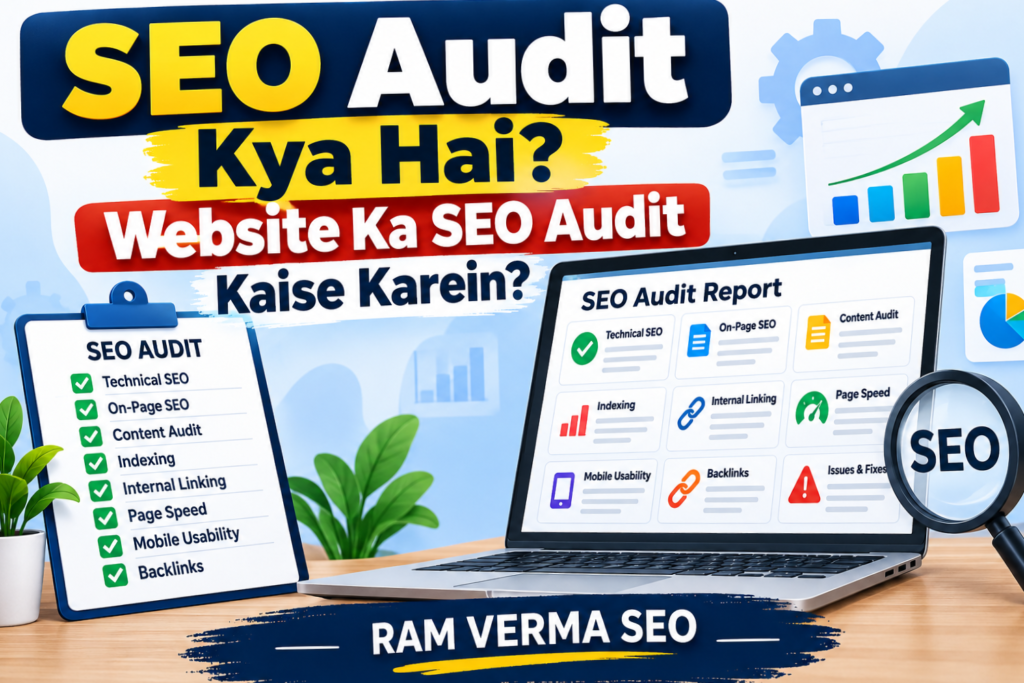
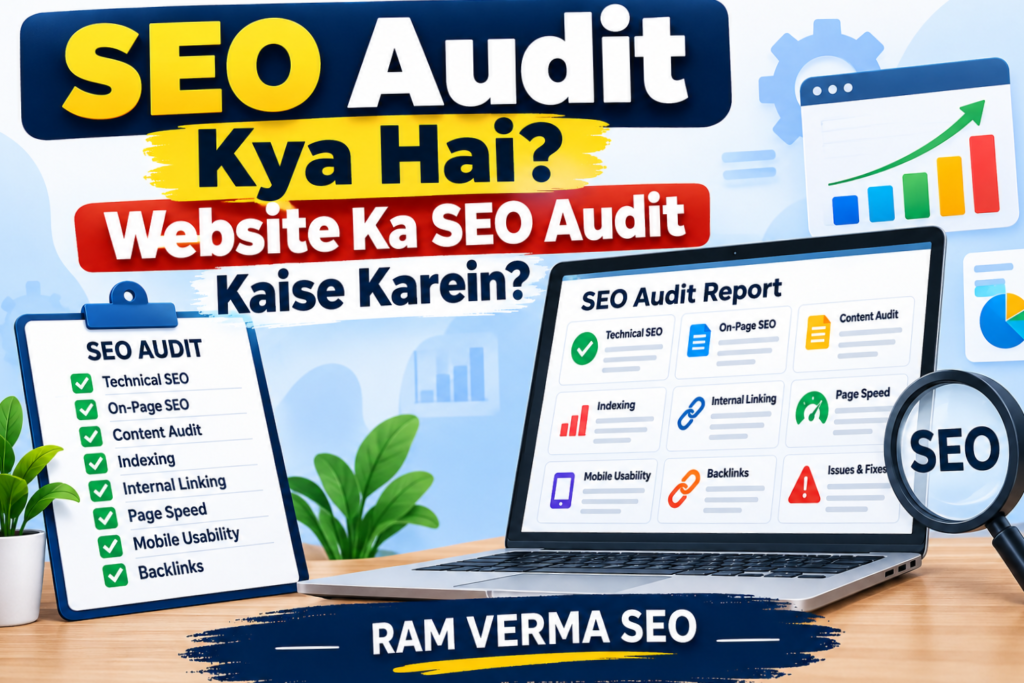
Aapki website Google par rank nahi kar rahi hai, organic traffic kam ho raha hai, kuch pages index nahi ho rahe hain, ya visitors website par aane ke baad convert nahi ho rahe hain, to sirf keywords add karna solution nahi hai. Sabse pehle ye samajhna zaroori hai ki SEO audit kya hai aur website mein actual problem kahan hai.
SEO audit kya hai ye samajhne ke baad, website ka SEO audit karna isliye important hai kyunki isse technical SEO, on-page SEO, content, indexing aur website performance se judi problems identify ki ja sakti hain. Is process se pata chalta hai ki website search engines aur users ke liye kitni accessible aur useful hai.Agar aap soch rahe hain ki SEO audit kya hai, to simple words mein ye website ki overall SEO health check karne ka process hai, jisme technical issues, content quality, indexing, internal linking aur website performance ko check kiya jata hai, Isi wajah se SEO audit kya hai aur ise kab karna chahiye, ye samajhna har website owner ke liye useful hai
Yahin par SEO Audit ka role aata hai.
SEO Audit ek systematic process hai jisme website ke technical setup, pages, content, internal links, indexing, user experience aur SEO-related issues ko check kiya jata hai. Iska purpose sirf errors ki list banana nahi, balki ye samajhna hai ki website search engines aur users ke liye kitni accessible, relevant aur useful hai.
Is guide mein hum samjhenge ki SEO Audit kya hota hai, iski zarurat kyun padti hai aur website ka SEO Audit practically kaise kiya ja sakta hai.
SEO Audit Kya Hai?
SEO Audit kisi website ki search engine optimization health ko systematically evaluate karne ka process hai.
Simple language mein kahen to SEO Audit mein hum website se related important questions ka answer dhoondhte hain:
- Kya Google website ke important pages ko crawl kar pa raha hai?
- Kya important pages index ho rahe hain?
- Kya pages ka search intent ke saath proper match hai?
- Kya titles aur headings clear hain?
- Kya website ka content useful aur relevant hai?
- Kya internal linking logical hai?
- Kya website mobile users ke liye properly work karti hai?
- Kya pages unnecessarily slow hain?
- Kya broken links ya technical problems hain?
- Kya website ki overall SEO strategy business goals ke saath aligned hai?
SEO Audit ke baad humein problems, opportunities aur priorities ka clearer picture milta hai.
Website SEO Audit Kyun Zaroori Hai?
SEO ek single setting nahi hai. Website mein hundreds of pages, links, images, technical elements aur content pieces ho sakte hain. Time ke saath website mein changes hone par naye SEO issues bhi develop ho sakte hain.
For example, ek website par:
- Old URLs delete ho sakte hain.
- Internal links broken ho sakte hain.
- Important pages accidentally noindex ho sakte hain.
- Duplicate content create ho sakta hai.
- Images unnecessarily large ho sakti hain.
- Content outdated ho sakta hai.
- Search intent change ho sakta hai.
- Important pages ko internal links nahi mil rahe ho sakte hain.
SEO Audit in problems ko identify karne mein help karta hai.
Lekin ek important point hai: SEO Audit ka purpose har possible SEO issue ko fix karna nahi hota. Pehle identify karna hota hai ki kaunsi problem genuinely important hai aur business ya users par uska kya impact ho sakta hai.
SEO Audit Mein Kya-Kya Check Hota Hai?
Ek useful SEO Audit ko multiple areas mein divide karna practical hota hai.
1. Technical SEO Audit
Technical SEO ka focus website ke technical foundation par hota hai.
Isme commonly check kiya jata hai:
- Website crawlability
- Indexability
- XML sitemap
- Robots.txt
- HTTPS
- Canonical URLs
- Redirects
- 404 errors
- Broken links
- Mobile usability
- Page performance
- Core Web Vitals
- URL structure
Technical problem ka impact website ke important pages par pad sakta hai. Isliye audit mein pehle critical technical issues identify karna useful hota hai.
Agar aap Technical SEO ko detail mein samajhna chahte hain, to aap hamara Technical SEO guide bhi padh sakte hain.
2. Indexing Audit
Website ka page publish hona aur Google ke index mein hona ek hi baat nahi hai.
Isliye important pages ke liye check karein:
- Kya page index ho raha hai?
- Kya page accidentally noindex hai?
- Kya Googlebot ko page access karne mein problem hai?
- Kya canonical kisi doosre URL par point kar raha hai?
- Kya page duplicate ya low-value version to nahi hai?
Google Search Console indexing-related issues identify karne ke liye particularly useful hai.
3. On-Page SEO Audit
On-page SEO audit mein individual pages ko evaluate kiya jata hai.
Important elements:
- SEO Title
- Meta Description
- H1
- H2/H3 headings
- Main topic coverage
- Search intent
- Keyword relevance
- Internal links
- External references where appropriate
- Image optimization
- Alt text
- Structured data where appropriate
Sirf keyword ko page par baar-baar use karna on-page SEO nahi hai. Page ko user ke actual question ka useful answer dena bhi equally important hai.
Aap On-Page SEO ke basics ke liye hamara On-Page SEO guide dekh sakte hain.
4. Search Intent Audit
Ye SEO Audit ka bahut important part hai.
Maan lijiye aapka target keyword hai “keyword research”.
User shayad jaana chahta hai:
- Keyword research kya hai?
- Keyword research kaise karein?
- Kaunse tools use karein?
- Practical example kya hai?
Agar aapka page sirf keyword research ki definition deta hai, to content user ki complete need satisfy nahi kar sakta.
Isliye audit ke waqt check karein:
Keyword → Search Intent → Content → User Need
Ye chain logically connected honi chahiye.
Search Intent ke baare mein detail ke liye aap Search Intent guide padh sakte hain.
5. Content Audit
Content audit ka purpose sirf word count check karna nahi hai.
Har important page ke liye questions poochhein:
- Kya content original value provide karta hai?
- Kya information accurate hai?
- Kya topic adequately cover hua hai?
- Kya content outdated ho chuka hai?
- Kya article mein unnecessary repetition hai?
- Kya reader ko practical answer mil raha hai?
- Kya article ka purpose clear hai?
Har page ko sirf isliye delete nahi karna chahiye kyunki uska traffic kam hai. Pehle us page ka purpose, quality, relevance aur potential samajhna zaroori hai.
6. Internal Linking Audit
Internal links website ke different pages ko connect karte hain aur users ko related information discover karne mein help karte hain.
Audit ke waqt check karein:
- Important pages ko internal links mil rahe hain?
- Related articles properly connected hain?
- Anchor text descriptive hai?
- Kya koi important page isolated hai?
- Kya links naturally content ke context mein placed hain?
Example:
Keyword Research → Search Intent → On-Page SEO → Technical SEO → SEO Audit
Aisi logical linking website ke content architecture ko samajhne mein users aur search engines dono ke liye useful ho sakti hai.
7. Mobile SEO Audit
Aaj website ko sirf desktop par check karna enough nahi hai.
Mobile audit mein check karein:
- Page mobile screen par properly display ho raha hai?
- Text readable hai?
- Buttons easily clickable hain?
- Horizontal scrolling to nahi?
- Navigation usable hai?
- Important content mobile par available hai?
Mobile users ke liye poor experience website ki overall usability ko affect kar sakta hai.
8. Page Experience aur Core Web Vitals
Website performance bhi audit ka important part hai.
Common areas:
- Loading performance
- Interactivity
- Layout stability
- Large images
- Unnecessary scripts
- Browser caching
- Server response
Core Web Vitals ke metrics user experience ke different aspects ko measure karte hain. Lekin sirf metrics improve karna SEO ka complete solution nahi hai. Content relevance aur usefulness bhi important hain.
9. URL Audit
Website ke URLs simple aur understandable hone chahiye.
Audit mein check karein:
- Kya URL unnecessarily complicated hai?
- Kya important URL structure consistent hai?
- Kya unnecessary parameters create ho rahe hain?
- Kya duplicate URL versions exist karte hain?
- Kya old URLs properly redirect kiye gaye hain?
URL structure ko website ke overall architecture ke saath consistent rakhna better hota hai.
10. Backlink aur Off-Page Audit
SEO Audit mein website ke external signals ko bhi review kiya ja sakta hai.
Backlink audit mein dekhein:
- Website ko kaunse domains link kar rahe hain?
- Links relevant sources se aa rahe hain?
- Kya suspicious patterns hain?
- Kya important pages ko quality references mil rahe hain?
- Competitors ke comparison mein relevant link opportunities kya hain?
Backlinks ko sirf quantity ke basis par evaluate nahi karna chahiye. Relevance aur context bhi important hain.
Website Ka SEO Audit Kaise Karein? Step-by-Step Process
Ab practical process samajhte hain.
Step 1: Website ka Goal Define Karein
Audit shuru karne se pehle website ka primary objective identify karein.
Example:
- Leads generate karna
- Products sell karna
- Local customers lana
- Information provide karna
- Brand visibility improve karna
Goal clear nahi hoga to audit priorities bhi unclear ho sakti hain.
Step 2: Important Pages Identify Karein
Website ke important pages ki list banayein.
For example:
- Homepage
- Service pages
- Product pages
- Category pages
- Important blog posts
- Contact page
Har page ko equal priority dena zaroori nahi hai.
Step 3: Google Search Console Check Karein
Search Console se useful information mil sakti hai, jaise:
- Indexing status
- Search queries
- Clicks
- Impressions
- Average position
- Sitemap status
- Page indexing issues
Is data ko website ke actual pages ke saath compare karein.
Step 4: Technical Issues Identify Karein
Ab crawlability, indexability, redirects, broken links, sitemap aur other technical areas check karein.
Critical issues ko pehle separate karein.
Step 5: Content aur Search Intent Review Karein
Top pages ko manually read karein.
Check karein:
User kya chahta hai?
Page kya provide kar raha hai?
Kya dono match karte hain?
Yahan automated tool ke output se zyada human review useful ho sakta hai.
Step 6: Internal Linking Improve Karein
Related pages ko naturally connect karein.
Example:
SEO Basics → Keyword Research → Search Intent → On-Page SEO → Technical SEO → SEO Audit
Isse content architecture more logical ban sakta hai.
Step 7: Priority List Banayein
Audit ke end mein issues ki simple list banayein:
High Priority:
Indexing problem, important page inaccessible, major technical issue
Medium Priority:
Internal linking gaps, outdated content, metadata improvements
Low Priority:
Minor formatting improvements, non-critical cleanup
Isse audit actionable ban jata hai.
SEO Audit Ke Liye Kaunse Tools Useful Hain?
Different tasks ke liye different tools useful ho sakte hain.
Google Search Console
Indexing, search performance aur search-related website data ke liye.
Google Analytics
Website visitors ke behaviour aur traffic analysis ke liye.
PageSpeed Insights
Page performance aur Core Web Vitals-related information ke liye.
Screaming Frog
Large websites ko crawl karke technical aur on-page issues identify karne ke liye useful hai.
Semrush / Ahrefs
Keyword, competitor aur backlink research ke liye useful ho sakte hain.
Tool ka report final truth nahi hota. Tool data ko website ke context aur human review ke saath interpret karna chahiye.
SEO Audit Mein Common Mistakes
Sirf Technical SEO Check Karna
SEO Audit sirf broken links aur page speed ka naam nahi hai. Content, intent, indexing, internal linking aur overall strategy bhi important hain.
Har Warning Ko Critical Samajhna
SEO tools bahut saari recommendations de sakte hain. Har warning business-critical issue nahi hoti.
Keyword Density Ke Peeche Bhaagna
Keyword ko unnaturally repeat karna user experience ko damage kar sakta hai.
Competitor Ko Copy Karna
Competitor ke pages dekhna useful research ho sakta hai, lekin unka content copy karna long-term strategy nahi hai.
Word Count Ko Ranking Factor Samajhna
Longer article automatically better article nahi hota. Content ko user ki need ke according comprehensive hona chahiye.
SEO Audit Checklist
Audit ke end mein ye basic checklist use kar sakte hain:
- Website crawlable hai
- Important pages indexable hain
- XML sitemap properly configured hai
- Robots.txt correctly configured hai
- HTTPS active hai
- Important pages accessible hain
- 404/broken links reviewed hain
- Titles relevant hain
- H1/H2 structure logical hai
- Search intent satisfy ho raha hai
- Content useful aur accurate hai
- Internal linking logical hai
- Mobile experience good hai
- Page performance reviewed hai
- Important pages properly prioritized hain
- Backlink profile reviewed hai
- SEO issues priority ke according organized hain
Frequently Asked Questions
SEO Audit kya hota hai?
SEO Audit website ki technical, content, on-page, indexing, internal linking, performance aur other SEO-related areas ko systematically review karne ka process hai.
SEO Audit kitne time mein karna chahiye?
Iska fixed interval har website ke liye same nahi hota. Small website ke liye periodic review useful ho sakta hai, jabki frequently changing ya large website ko more regular monitoring ki zarurat ho sakti hai.
Kya SEO Audit se ranking guarantee hoti hai?
Nahi. SEO Audit problems aur opportunities identify karne mein help karta hai, lekin search rankings multiple factors par depend karti hain. Isliye audit ko ranking guarantee ke roop mein nahi dekhna chahiye.
Kya SEO Audit free mein kar sakte hain?
Haan. Google Search Console, Google Analytics aur PageSpeed Insights jaise tools basic audit ke liye useful information provide karte hain. Advanced websites ke liye specialized crawling aur SEO tools additional insights de sakte hain.
Kya har SEO issue fix karna zaroori hai?
Nahi. Issues ko impact, relevance aur priority ke basis par evaluate karna chahiye. High-impact problems ko pehle address karna practical approach hai.
Conclusion
SEO Audit ka real purpose sirf website mein errors dhoondhna nahi hai. Iska purpose website ko systematically samajhna hai—Google important pages ko access aur understand kar pa raha hai ya nahi, users ko useful information mil rahi hai ya nahi, aur website ki SEO structure business goals ke saath properly aligned hai ya nahi.
Ek effective SEO Audit mein Technical SEO, Indexing, On-Page SEO, Search Intent, Content, Internal Linking, Mobile Experience, Performance aur Off-Page signals ko context ke saath review kiya jata hai.
Sabse important baat ye hai ki audit ke baad sirf report generate na karein. Findings ko priority dein, high-impact problems ko pehle address karein aur website ko continuously improve karein.
Isi approach se SEO Audit ek simple checklist ke बजाय ek practical SEO improvement process ban sakta hai.