Agar aapki website Google par दिखाई तो देती है, lekin right audience tak nahi pahunch rahi, traffic aa raha hai lekin enquiries nahi mil rahi, ya har article publish karne ke baad samajh nahi aa raha ki next kya karna hai, to problem sirf SEO ki nahi ho sakti. Yahan ek proper SEO Strategy ki zarurat hoti hai.
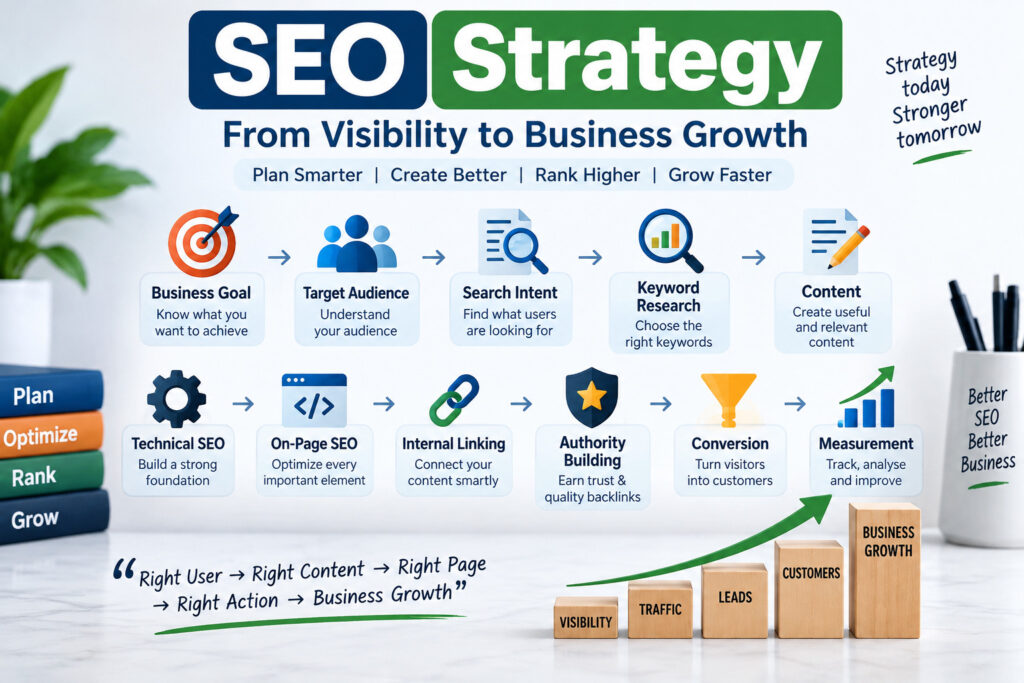
SEO Strategy ka matlab sirf keywords find karna, articles publish karna ya backlinks banana nahi hai. Ek strong strategy mein business goal, target audience, Search Intent, Keyword Research, Content,
Technical SEO, On-Page SEO, Internal Linking, Off-Page SEO aur Conversion ko ek proper plan ke saath connect kiya jata hai.
Simple words mein, SEO Strategy ek roadmap hai jo batata hai ki website ko Google Search mein visibility kaise milegi, right audience kaise aayegi aur organic traffic ko business results mein kaise convert kiya jayega.
Is guide mein hum theory se zyada practical approach se samjhenge ki ek business ke liye SEO Strategy kaise banayi ja sakti hai.
SEO Strategy Kya Hai?
SEO Strategy ek planned process hai jisme website ke SEO ke different parts ko ek common business goal ke according manage kiya jata hai.
For example, maan lijiye ek Digital Marketing Agency ko Google se new clients chahiye.
Uske liye sirf “SEO” keyword par article likhna enough nahi hoga.
Usko pehle ye samajhna hoga:
- Target customer kaun hai?
- Customer Google par kya search karta hai?
- Us search ke peeche actual intent kya hai?
- Kaun se keywords business ke liye valuable hain?
- Kaun se topics par content banana chahiye?
- Website technically healthy hai ya nahi?
- Competitors kis type ke content par rank kar rahe hain?
- Authority aur relevant backlinks kaise build honge?
- Website visitor ko lead mein kaise convert kiya jayega?
In sab questions ke answers ko ek connected plan mein lana hi practical SEO Strategy hai.
SEO Strategy Aur SEO Tactics Mein Kya Difference Hai?
Ye difference samajhna important hai.
Strategy batati hai ki kya karna hai aur kyun karna hai.
Tactics batati hain ki us kaam ko practically kaise karna hai.
Example ke liye, agar kisi SEO freelancer ka goal foreign clients acquire karna hai, to uski strategy ho sakti hai:
“Foreign businesses ke liye relevant SEO visibility aur authority build karna.”
Is strategy ke andar tactics ho sakti hain:
- Country-wise Keyword Research
- Competitor Analysis
- Service Landing Pages
- Case Study Content
- Expert Content
- Link Building Outreach
- Digital PR
- LinkedIn networking
- Email Outreach
Isliye sirf ye decide karna ki “har week 3 articles publish karunga” ek complete SEO Strategy nahi hai.
Agar un articles ka Search Intent, audience aur business goal se connection nahi hai, to content ki quantity badhegi, lekin strategy strong nahi hogi.
1. Sabse Pehle Business Goal Define Kijiye
SEO Strategy banane ka first step keywords nahi, Business Goal hona chahiye.
Aapko pehle decide karna hoga ki SEO se actual mein chahiye kya.
Goal ho sakta hai:
- More Leads
- More Sales
- Service Enquiries
- Phone Calls
- Local Customers
- Brand Visibility
- Course Registrations
- Foreign Clients
- Organic Traffic
Maan lijiye ek Local Dentist ki website hai.
Uske liye sirf “website traffic badhana” strong goal nahi hai.
Uska practical goal ho sakta hai:
“Google se local customers ki appointment enquiries increase karna.”
Similarly, ek SEO Freelancer ka goal ho sakta hai:
“Google Search se qualified business owners ko website par laakar SEO enquiry generate karna.”
Jab Business Goal clear hota hai, tab Keyword Research, Content aur Landing Pages ko right direction milti hai.
2. Target Audience Ko Samjhiye
SEO Strategy ka next important part hai Target Audience.
Aapko ye samajhna hoga ki aapka ideal customer kaun hai aur uski actual problem kya hai.
Example:
Ek beginner search kar sakta hai:
“SEO kya hai?”
Ek business owner search kar sakta hai:
“Meri website Google par rank kyu nahi kar rahi?”
Aur jo client SEO service lena chahta hai, wo search kar sakta hai:
“SEO Expert India”
Teenon searches SEO se related hain, lekin teenon ka purpose different hai.
Isliye sirf keyword dekhna enough nahi hai.
Aapko ye samajhna hoga:
“User kya search kar raha hai aur us moment par usko actually kya chahiye?”
Yahi Search Intent ko SEO Strategy ka important part banata hai.
3. Search Intent Ko Ignore Mat Kijiye
Search Intent ka simple meaning hai:
“User kisi particular query ko search karke actually kya achieve karna chahta hai?”
Example:
“What is SEO?”
Yahan user information chahta hai.
“SEO services India”
Yahan user services ko explore kar raha ho sakta hai.
“Hire SEO Expert India”
Yahan user service provider find karne ke closer ho sakta hai.
Ab imagine kijiye ki koi “Hire SEO Expert India” search kare aur usko ek basic beginner article mile:
“SEO kya hai?”
Content technically SEO ke baare mein hai, lekin user ki actual need ko properly satisfy nahi karta.
Isliye Keyword + Search Intent ka combination important hai.
Aapke existing “Search Intent Kya Hai?” article ko is section se naturally Internal Link kiya ja sakta hai.
4. Keyword Research Ko Business Goal Se Connect Kijiye
Keyword Research ka purpose sirf high search volume wale keywords collect karna nahi hai.
Aapko ye dekhna hai ki kaun se keywords:
- Relevant hain
- Right audience la sakte hain
- Business intent rakhte hain
- Content opportunity create karte hain
- Conversion ke chances create kar sakte hain
Keywords ko broadly different groups mein divide kiya ja sakta hai.
Informational Keywords
Example:
- SEO kya hai?
- Keyword Research kya hai?
- Technical SEO kya hai?
- Backlinks kya hote hain?
In keywords ke around educational content create kiya ja sakta hai.
Commercial Keywords
Example:
- SEO Services
- SEO Expert
- SEO Agency
- Local SEO Services
Ye keywords service aur comparison content ke liye useful ho sakte hain.
Transactional Keywords
Example:
- Hire SEO Expert
- SEO Audit Service
- Buy SEO Package
Yahan user action lene ke comparatively closer ho sakta hai.
Isliye Keyword Research ko sirf search volume ka game samajhna mistake hai.
Right keyword wo hai jo right audience ko right page tak laata hai.
Aapke existing “Keyword Research” article ko yahan Internal Link diya ja sakta hai.
5. Topical Authority Aur Content Cluster Build Kijiye
Ye part long-term SEO ke liye bahut important hai.
Agar aap ek website par random topics publish karte rahenge, to content ki quantity badhegi, lekin overall topical structure weak ho sakta hai.
Maan lijiye main topic hai:
SEO
Iske under related topics ho sakte hain:
- SEO Basics
- Keyword Research
- Search Intent
- On-Page SEO
- Technical SEO
- Off-Page SEO
- Local SEO
- International SEO
- SEO Audit
- Link Building
- SEO Strategy
Ab in topics ko separate articles ki tarah publish karne ke saath-saath Internal Linking ke through connect kiya ja sakta hai.
Aapki website par already:
SEO Basics → Keyword Research → Search Intent → SEO Services → On-Page SEO
jaise topics cover ho chuke hain.
Ab SEO Strategy article in topics ko ek bigger practical framework ke saath connect kar sakta hai.
Yahi ek strong Topical Cluster banane ki direction hai.
6. Content Ko Reader-First Rakhiye
SEO Content ka matlab ye nahi hai ki target keyword ko article mein baar-baar repeat kar diya jaye.
Aisa content natural nahi lagta.
Ek useful article mein reader ko actual value milni chahiye.
For example:
- Practical examples
- Real workflow
- Common mistakes
- Step-by-step process
- Original screenshots
- First-hand experience
- Data ya evidence
- Useful Internal Links
- Relevant external references
Agar aapne kisi SEO process ko personally implement kiya hai, to us experience ko relevant jagah par explain karna Content ko zyada trustworthy bana sakta hai.
Lekin yahan ek strict rule hai:
Fake experience, fake results, fake clients, fake testimonials ya fake traffic numbers kabhi create nahi karne chahiye.
Jo actually kiya hai, wahi show kijiye.
Jo result mila hai, wahi explain kijiye.
Ye approach long-term E-E-A-T ke liye zyada strong hai.
7. Technical SEO Ko Foundation Banaiye
Content important hai, lekin website ka technical foundation bhi strong hona chahiye.
SEO Strategy mein Technical SEO ke important areas ho sakte hain:
- Crawling
- Indexing
- XML Sitemap
- Robots.txt
- Canonical
- HTTPS
- Mobile Friendliness
- Page Speed
- Core Web Vitals
- Broken Links
- Redirects
- Duplicate Content
- Structured Data
- URL Structure
Agar Google kisi important page ko properly crawl ya index nahi kar pa raha, to sirf excellent content likhne se problem solve nahi hogi.
Lekin Technical SEO ko unnecessarily complicated bhi nahi banana chahiye.
First priority honi chahiye:
“Jo technical issue actual visibility ko affect kar raha hai, use identify karke fix karna.”
8. On-Page SEO Ko Strategy Ka Part Rakhiye
On-Page SEO sirf Title Tag mein keyword dalne tak limited nahi hai.
Ek properly optimized page mein consider kiya ja sakta hai:
- SEO Title
- H1
- Relevant Headings
- Search Intent
- Helpful Content
- Natural Keyword Usage
- Internal Links
- External Links
- Image Optimization
- Alt Text
- Meta Description
- Schema
- CTA
Aapke existing “On-Page SEO Kya Hai?” article ko yahan relevant Internal Link diya ja sakta hai.
Iska benefit ye hai ki reader ko basic explanation ke baad deeper information lene ka option milta hai.
9. Internal Linking Ko Random Mat Rakhiye
Internal Linking ka main purpose sirf SEO nahi hai.
Iska doosra important purpose hai:
“User ko next relevant information tak le jaana.”
Example ke liye is article mein:
Search Intent mention hua → Search Intent article
Keyword Research mention hua → Keyword Research article
On-Page SEO mention hua → On-Page SEO article
SEO Services mention hua → SEO Service article
Isse articles ek doosre se connected rahenge.
Aapka reader ek article padhkar website chhodne ke bajay related topic par aage ja sakta hai.
Isi tarah dheere-dheere ek strong Content Ecosystem build hota hai.
10. Off-Page SEO Aur Authority Building
SEO Strategy ka ek important part website ke bahar authority build karna bhi hai.
Isme focus sirf backlinks ki quantity par nahi hona chahiye.
Relevant opportunities ho sakti hain:
- Guest Contributions
- Digital PR
- Expert Source Opportunities
- Link Reclamation
- Broken Link Building
- Competitor Backlink Analysis
- Relevant Outreach
- Industry Mentions
- Resource Promotion
- Business Relationships
Lekin ek important point:
Har backlink valuable nahi hota.
Agar backlink irrelevant website se sirf number badhane ke liye banaya gaya hai, to uski value questionable ho sakti hai.
Better approach hai:
Relevance + Context + Quality + Natural Relationship
Yani Link Building ko shortcut ke bajay authority building ki tarah treat kijiye.
11. Local, National Ya International SEO Decide Kijiye
SEO Strategy business ke target market ke according change hoti hai.
Ek Raipur-based local business aur US-focused SEO agency ke liye same strategy apply nahi ki ja sakti.
Local Business
Focus ho sakta hai:
- Google Business Profile
- Local Keywords
- Location Pages
- Reviews
- Local Citations
- Local Backlinks
National Business
Focus ho sakta hai:
- National Keywords
- Service Pages
- Content Clusters
- Topical Authority
- Digital PR
- Authority Building
International Business
Additional focus ho sakta hai:
- Country-wise Search Behavior
- Localized Content
- Country-specific Keywords
- International Landing Pages
- Local Competitors
- Hreflang where required
Isliye strategy banane se pehle ye clear hona chahiye:
“Aap kis market se customers acquire karna chahte hain?”
12. SEO Ko Leads Aur Conversion Se Connect Kijiye
Ye part business SEO mein bahut important hai.
Suppose aapki website par organic traffic aa raha hai.
Lekin:
- CTA nahi hai
- Service page clear nahi hai
- Contact process difficult hai
- Trust signals nahi hain
- Next step clear nahi hai
To traffic aane ke baad bhi Lead Generation weak reh sakti hai.
Isliye Content ke context ke according relevant CTA hona chahiye.
Example:
“Agar aap apni website ka SEO Audit karwana chahte hain, to hamari SEO Service page par details dekhiye.”
Ya:
“Keyword Research ko practically samajhne ke liye hamara detailed Keyword Research guide padhiye.”
CTA natural hona chahiye.
Har paragraph ke baad “Contact Us” likhna Conversion Strategy nahi hai.
13. E-E-A-T Ko Practical Banaiye
E-E-A-T ko sirf website par “Expert” likh dene se strong nahi kiya ja sakta.
Real experience ko demonstrate karna zyada useful hai.
Aap include kar sakte hain:
- Author information
- About page
- First-hand experience
- Original screenshots
- Practical examples
- Case Studies
- Methodology
- Sources
- Genuine results
Agar aapne kisi SEO tool, website setup ya optimization process ko personally implement kiya hai, to relevant jagah par us experience ko explain kijiye.
Lekin result ko exaggerate mat kijiye.
Real proof > Big Claims
Ye approach reader ke trust ke liye bhi better hai aur long-term content quality ke liye bhi.
14. SEO Performance Ko Measure Kijiye
SEO Strategy banane ke baad measurement zaroori hai.
Sirf ranking position dekhna enough nahi hai.
Aap track kar sakte hain:
- Organic Clicks
- Impressions
- CTR
- Average Position
- Indexed Pages
- Organic Leads
- Form Submissions
- Phone Calls
- Top Performing Pages
- Traffic Changes
- Conversion Data
Google Search Console se Search Performance aur indexing-related data ko monitor kiya ja sakta hai.
Analytics data se ye samajhne mein help mil sakti hai ki organic visitors website par aane ke baad kya kar rahe hain.
Yahan important point ye hai ki SEO ka final objective sirf “Number 1 Ranking” nahi hona chahiye.
Business ke liye zyada important ho sakta hai:
Right Traffic → Right Audience → Right Action → Business Result
15. SEO Strategy Ek One-Time Kaam Nahi Hai
Ek common mistake hai:
“Website optimize kar di, ab SEO complete ho gaya.”
Actually SEO ek continuous process hai.
Competitors new content publish karenge.
Search behavior change ho sakta hai.
Old Content outdated ho sakta hai.
New Keywords aur Topics discover ho sakte hain.
Google Search bhi evolve hota rehta hai.
Isliye practical SEO workflow kuch is tarah ho sakta hai:
Research → Plan → Create → Optimize → Publish → Promote → Measure → Improve
Phir ye cycle repeat hoti hai.
Isi wajah se SEO Strategy ko ek fixed checklist ke bajay continuous improvement process samajhna zyada practical hai.
Practical SEO Strategy Framework
Agar aapko kisi business ke liye SEO Strategy zero se create karni hai, to ye framework use kar sakte hain:
Step 1 — Business Goal
SEO se actual business result kya chahiye?
Step 2 — Target Audience
Ideal customer kaun hai?
Step 3 — Search Intent
Customer kya aur kyun search karta hai?
Step 4 — Keyword Research
Relevant aur business-focused keywords identify kijiye.
Step 5 — Competitor Analysis
Competitors kis topic aur query par visibility le rahe hain?
Step 6 — Content Cluster
Pillar aur supporting topics ko connect kijiye.
Step 7 — Technical SEO
Crawling, Indexing, Speed aur website structure check kijiye.
Step 8 — On-Page SEO
Titles, headings, Content, Images aur Internal Links optimize kijiye.
Step 9 — Authority Building
Relevant Backlinks, PR, Outreach aur genuine mentions par kaam kijiye.
Step 10 — Conversion
Visitor ke liye clear next action rakhiye.
Step 11 — Measurement
Search Console aur Analytics data monitor kijiye.
Step 12 — Improvement
Data ke basis par strategy ko continuously improve kijiye.
SEO Strategy Mein Common Mistakes
1. Sirf High-Volume Keywords Ko Target Karna
High search volume ka matlab automatically high business value nahi hota.
2. Search Intent Ignore Karna
Keyword sahi ho sakta hai, lekin agar Content user ki actual need satisfy nahi karta, to benefit limited ho sakta hai.
3. Sirf Blog Publish Karna
Business website ko sirf informational articles nahi, balki relevant Service aur Conversion Pages bhi chahiye.
4. Keyword Stuffing
Ek hi keyword ko baar-baar dalne se Content unnatural ho sakta hai.
Natural language aur complete topic coverage par focus kijiye.
5. Backlink Quantity Ke Peeche Bhaagna
100 irrelevant backlinks se better ho sakta hai ki kuch genuinely relevant authority opportunities par focus kiya jaye.
6. Technical SEO Ignore Karna
Agar important pages crawl ya index hi nahi ho rahe, to Content Strategy ka full benefit nahi milega.
7. Fake E-E-A-T Create Karna
Fake clients, fake testimonials, fake awards aur fake results se bachna chahiye.
8. Sirf Ranking Ko Success Samajhna
Ranking useful metric hai, lekin business ke liye Leads, Sales, Enquiries aur qualified traffic zyada meaningful ho sakte hain.
SEO Strategy FAQs
1. SEO Strategy Kya Hai?
SEO Strategy ek planned process hai jisme Business Goal, Target Audience, Search Intent, Keyword Research, Content, Technical SEO, On-Page SEO, Internal Linking, Off-Page SEO aur Conversion ko ek connected plan ke saath manage kiya jata hai.
2. SEO Strategy Banane Ka First Step Kya Hona Chahiye?
SEO Strategy ka first step Keyword Research nahi, balki Business Goal define karna hona chahiye. Pehle clear kijiye ki SEO se aapko Traffic, Leads, Sales, Enquiries ya Brand Visibility mein se kya achieve karna hai.
3. SEO Strategy Aur SEO Tactics Mein Kya Difference Hai?
Strategy batati hai ki kya karna hai aur kyun karna hai, jabki Tactics batati hain ki us kaam ko practically kaise execute karna hai.
4. Kya Sirf High-Volume Keywords Ko Target Karna Chahiye?
Nahi. High search volume ka matlab automatically high business value nahi hota. Keyword ki relevance, Search Intent, audience aur conversion potential ko bhi consider karna chahiye.
5. SEO Strategy Mein Search Intent Kyun Important Hai?
Search Intent se pata chalta hai ki user kisi query ko search karke actually kya achieve karna chahta hai. Agar content user ki actual need satisfy nahi karta, to relevant keyword hone ke baad bhi page ka performance limited ho sakta hai.
6. Kya SEO Strategy Sirf Blog Content Par Based Hoti Hai?
Nahi. Ek complete SEO Strategy mein Business Goal, Technical SEO, On-Page SEO, Content, Internal Linking, Authority Building, Service Pages aur Conversion bhi important parts ho sakte hain.
7. SEO Strategy Ko Kitni Baar Update Karna Chahiye?
SEO Strategy ko fixed checklist ki tarah treat nahi karna chahiye. Search behavior, competitors, content performance aur business goals ke according strategy ko continuously review aur improve karna practical approach hai.
8. SEO Strategy Ka Success Kaise Measure Kiya Jata Hai?
Sirf ranking dekhna enough nahi hai. Organic Clicks, Impressions, CTR, Average Position, Organic Leads, Enquiries, Conversion Data aur Business Results ko collectively monitor karna chahiye.
Final Takeaway
SEO Strategy ka matlab zyada keywords + zyada articles + zyada backlinks banana nahi hai.
Ek strong SEO Strategy mein:
Business Goal + Target Audience + Search Intent + Keyword Research + Content + Technical SEO + On-Page SEO + Internal Linking + Authority Building + Conversion + Measurement
sab ek connected system ki tarah kaam karte hain.
Agar aap sirf Google Ranking ke liye Content bana rahe hain, to strategy incomplete ho sakti hai.
Lekin agar aap har step par ye question puchte hain:
“User kya chahta hai, usko kaunsi information chahiye, meri website uski problem ko kaise solve kar sakti hai aur us visitor ko business ke liye meaningful action tak kaise le ja sakti hai?”
to aapki SEO approach zyada practical aur business-focused banne lagti hai.
Aur yahi ek achhi SEO Strategy ki asli strength hai:
Right User → Right Content → Right Page → Right Action → Business Growth
SEO mein long-term success ke liye kisi ek shortcut ke bajay useful Content, strong website foundation, relevant authority aur continuous improvement par focus karna zyada practical approach hai.